Sunday, June 3, 2012

Why should I donate blood?


Q: Why should I donate blood?

A: Safe blood saves lives and improves health. Blood transfusion is needed for:
  • women with complications of pregnancy, such as ectopic pregnancies and haemorrhage before, during or after childbirth;
  • children with severe anaemia often resulting from malaria or malnutrition;
  • people with severe trauma following accidents; and
  • many surgical and cancer patients.
It is also needed for regular transfusions for people with conditions such as thalassaemia and sickle cell disease and is used to make products such as clotting factors for people with haemophilia.
There is a constant need for regular blood supply because blood can be stored for only a limited time before use. Regular blood donations by a sufficient number of healthy people is needed to ensure that safe blood will be available whenever and wherever it is needed.
Blood is the most precious gift that anyone can give to another person — the gift of life. A decision to donate your blood can save a life, or even several if your blood is separated into its components — red cells, platelets and plasma — which can be used individually for patients with specific conditions.

Saturday, May 19, 2012

Transit of Venus: Venus will pass across the face of the sun, producing a silhouette that no one alive today will likely see again


On June 5th, 2012, Venus will pass across the face of the sun, producing a silhouette that no one alive today will likely see again.
Transits of Venus are very rare, coming in pairs separated by more than a hundred years. This June's transit, the bookend of a 2004-2012 pair, won't be repeated until the year 2117. Fortunately, the event is widely visible. Observers on seven continents, even a sliver of Antarctica, will be in position to see it.
The nearly 7-hour transit begins at 3:09 pm Pacific Daylight Time (22:09 UT) on June 5th. The timing favors observers in the mid-Pacific where the sun is high overhead during the crossing.  In the USA, the transit will at its best around sunset. That's good, too. Creative photographers will have a field day imaging the swollen red sun "punctured" by the circular disk of Venus.
Observing tip: Do not stare at the sun. Venus covers too little of the solar disk to block the blinding glare.  Instead, use some type of projection technique or a solar filter. A #14 welder's glass is a good choice.  Many astronomy clubs will have solar telescopes set up to observe the event; contact your local club for details. 
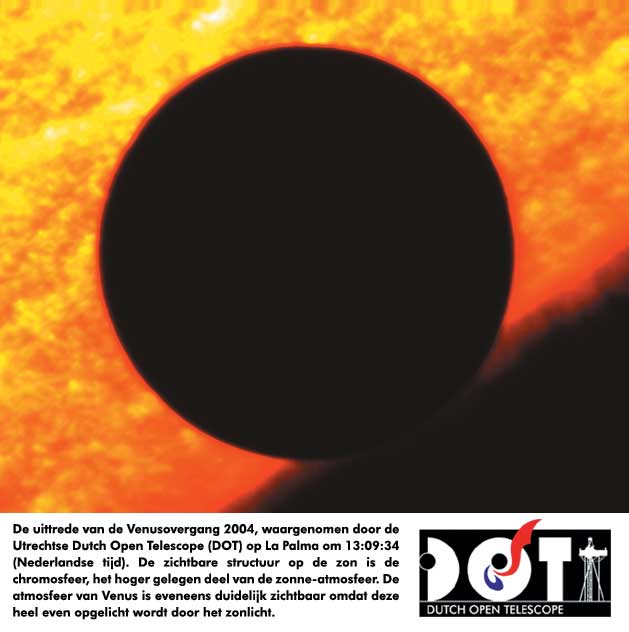
Transit of Venus (halpha,200px)
The June 8, 2004, transit of Venus photographed by Frans Snik at the Dutch Open Telescope in La Palma, Canary Islands. 
Transits of Venus first gained worldwide attention in the 18thcentury.  In those days, the size of the solar system was one of the biggest mysteries of science.   The relative spacing of planets was known, but not their absolute distances. How many miles would you have to travel to reach another world?  The answer was as mysterious then as the nature of dark energy is now.
Venus was the key, according to astronomer Sir Edmund Halley. He realized that by observing transits from widely-spaced locations on Earth it should be possible to triangulate the distance to Venus using the principles of parallax.
The idea galvanized scientists who set off on expeditions around the world to view a pair of transits in the 1760s.  The great explorer James Cook himself was dispatched to observe one from Tahiti, a place as alien to 18th-century Europeans as the Moon or Mars might seem to us now.  Some historians have called the international effort the "the Apollo program of the 18th century."
In retrospect, the experiment falls into the category of things that sound better than they actually are.  Bad weather, primitive optics, and the natural "fuzziness" of Venus’s atmosphere prevented those early observers from gathering the data they needed.  Proper timing of a transit would have to wait for the invention of photography in the century after Cook’s voyage.  In the late 1800s, astronomers armed with cameras finally measured the size of the Solar System as Edmund Halley had suggested.
Transit of Venus (iss, 200px)
A double transit: the ISS+Venus on June 8, 2004. Photo credit: Tomas Maruska of Stupava, Slovakia 
This year’s transit is the second of an 8-year pair. Anticipation was high in June 2004 as Venus approached the sun.  No one alive at the time had seen a Transit of Venus with their own eyes, and the hand-drawn sketches and grainy photos of previous centuries scarcely prepared them for what was about to happen.  Modern solar telescopes captured unprecedented view of Venus’s atmosphere backlit by solar fire.  They saw Venus transiting the sun’s ghostly corona, and gliding past magnetic filaments big enough to swallow the planet whole.  One photographer even caught a spaceship, the International Space Station, transiting the sun alongside Venus. 
2012 should be even better as cameras and solar telescopes have improved. Moreover, NASA’s Solar Dynamics Observatory is going to be watching too. SDO will produce Hubble-quality images of this rare event.

Friday, May 18, 2012

All about leishmaniasis - part 4: Treatment, prevention and control of Kala Azar


Treatment of Leishmaniasis

The treatment of leishmaniasis depends on the form of the disease (cutaneous, mucocutaneous, or visceral), and may be in the form of tablets or injections. Cutaneous leishmaniasis sometimes heals on its own and may not require treatment.
Patients should consult with their primary health care provider. Some patients may be referred to a specialist, such as a dermatologist or infectious disease specialist. Your health care provider can talk with CDC staff about whether and how you should be treated.

Prevention & Control

The best way for travelers to prevent infection is to protect themselves from sand fly bites. To decrease the risk of being bitten:
Avoid outdoor activities, especially from dusk to dawn, when sand flies generally are the most active.
When outdoors (or in unprotected quarters):
  • Minimize the amount of exposed skin. To the extent that is tolerable in the climate, wear long-sleeved shirts, long pants, and socks; and tuck your shirt into your pants.
  • Apply insect repellent to exposed (uncovered) skin and under the ends of sleeves and pant legs. Follow the instructions on the label of the repellent. The most effective repellents are those that contain the chemical DEET (N,N-diethylmetatoluamide).
Note:
Bed nets, repellents, and insecticides should be purchased before traveling and can be found in hardware, camping, and military surplus stores.
When indoors:
  • Stay in well-screened or air-conditioned areas.
  • Keep in mind that sand flies are much smaller than mosquitoes and therefore can get through smaller holes.
  • Spray living/sleeping areas with an insecticide to kill insects.
  • If you are not sleeping in a well-screened or air-conditioned area, use a bed net and tuck it under your mattress. If possible, use a bed net that has been soaked in or sprayed with a pyrethroid-containing insecticide (permethrin or deltamethrin). The same treatment can be applied to screens, curtains, sheets, and clothing (clothing should be retreated after five washings).

All about Leishmaniasis part 3: Diagnosis of Kala Azar


Diagnosis of Leishmaniasis

Image of a bone marrow biopsy showing a macrophage containing Leishmania amastigotes.
Bone marrow biopsy specimen from a patient with visceral leishmaniasis showing a macrophage containing Leishmaniaamastigotes. CDC photo.
Diagnosis of visceral leishmaniasis may require taking a blood sample and/or taking a biopsy from the bone marrow to show the parasite. Diagnosis of cutaneous leishmaniasis will require a small biopsy or scraping of the ulcer. Diagnosis of mucocutaneous leishmaniasis requires a biopsy of the affected tissues.  
Biopsy samples are examined by microscopy, culture and other methods to look for the parasite and identify the specific kind of Leishmania causing the ulcer. Some of these methods will give results within a few days, but culture may take 2-4 weeks to demonstrate the parasite.

All about leishmaniasis - part 2: Kala azar disease manifestations


Leishmaniasis Disease

  • The most common form of leishmaniasis is localized cutaneous leishmaniasis (CL), which usually appears as one or more painless ulcers.   
  • Visceral leishmaniasis (VL) is a febrile illness with weight loss, enlargement of the spleen and liver, and decreases in the production of blood cells that can lead to anemia, bleeding and infections with other microorganisms. Without treatment, this form of the disease is nearly always fatal.
  • Mucocutaneous leishmaniasis is a rare form of the disease that can occur months or years after the healing of a CL ulcer. This form of the disease can affect the nasal septum, palate and other parts of the nasopharynx.
Image of a cutaneous leishmaniasis ulcer.
Typical New World cutaneous leishmaniasis ulcer. Photo: B. Arana, MERTU, Guatemala.
Image of a patient with an enlarged spleen undergoing a physical exam.
Marked enlargement of the spleen typical of visceral leishmaniasis in a patient in lowland Nepal. Photo: C. Bern, CDC.

What is Leishmaniasis? Everything you ever wanted to know about Kala Azar

Image of a Phlebotomus papatasi sandfly which is responsible for the vector-borne parasitic disease leishmaniasis next to an image of Leishmania sp. promastigotes from culture. This is the stage of the parasite that occurs inside the mid-gut of the sand fly.
Image: A Phlebotomus papatasi sand fly that transmits one type of leishmaniasis, next to an image of Leishmania sp. promastigotes from culture. This is the stage of the parasite that occurs inside the mid-gut of the sand fly.
Leishmaniasis includes two major diseases, cutaneous leishmaniasis and visceral leishmaniasis, caused by more than 20 different leishmanial species.
Cutaneous leishmaniasis, the most common form of the disease, causes skin ulcers. Visceral leishmaniasis causes a severe systemic disease that is usually fatal without treatment. Mucocutaneous leishmaniasis is a rare but severe form affecting the nasal and oral mucosa.
Leishmaniasis is transmitted by the bite of small insects called sand flies. Many leishmanial species infect animals as well as humans. The distribution is world-wide, but 90% of visceral leishmaniasis cases occur in India, Bangladesh, Nepal, Sudan, Ethiopia and Brazil, while 90% of cutaneous leishmaniasis cases occur in Afghanistan, Algeria, Iran, Saudi Arabia, Syria, Brazil, Colombia, Peru and Bolivia.

Leishmaniasis FAQs


What is leishmaniasis?

Leishmaniasis is a parasitic disease that is found in parts of the tropics, subtropics, and southern Europe. Leishmaniasis is caused by infection with Leishmania parasites, which are spread by the bite of infected sand flies. There are several different forms of leishmaniasis in people. The most common forms arecutaneous leishmaniasis, which causes skin sores, and visceral leishmaniasis, which affects several internal organs (usually spleen, liver, and bone marrow).

What are the signs and symptoms of cutaneous leishmaniasis?

People who have cutaneous leishmaniasis have one or more sores on their skin. The sores can change in size and appearance over time. The sores may start out as bumps or nodules, and may end up as ulcers (like a volcano, with a raised edge and central crater). Some leishmaniasis ulcers are covered by a scab. They can be painless or painful. Some people have swollen glands near the sores (for example, under the arm if the sores are on the arm or hand).

What are the signs and symptoms of visceral leishmaniasis?

People who have visceral leishmaniasis usually have fever, weight loss, and an enlarged spleen and liver, and abnormal blood tests. People may have low blood counts, including a low red blood cell count (anemia), low white blood cell count, and low platelet count.

How common is leishmaniasis in the world?

The number of new cases of cutaneous leishmaniasis each year in the world is thought to be about 1.5 million. The number of new cases of visceral leishmaniasis is thought to be about 500,000.

In what parts of the world is leishmaniasis found?

In the New World (the Western Hemisphere), leishmaniasis is found in some parts of Mexico, Central America, and South America. It is not found in Chile or Uruguay.
In the Old World (the Eastern Hemisphere), leishmaniasis is found in some parts of Asia, the Middle East, Africa, and southern Europe. It is not found in Australia or the Pacific Islands.
Overall, leishmaniasis is found in specific areas of about 88 countries. Some of these countries account for most of the world’s cases of leishmaniasis:
  • Over 90 percent of the cases of cutaneous leishmaniasis occur in parts of Afghanistan, Algeria, Iran, Iraq, Saudi Arabia, and Syria (in the Old World) and in Brazil and Peru (in the New World);
  • Over 90 percent of the cases of visceral leishmaniasis occur in parts of India, Bangladesh, Nepal, Sudan, and Brazil.
Cases of leishmaniasis evaluated in the United States reflect travel and immigration patterns. For example, cases in U.S. civilian travelers typically are cases of cutaneous leishmaniasis acquired in common tourist destinations in Latin America. U.S. military personnel have become infected with leishmaniasis in Iraq and Afghanistan.

How do people get infected with Leishmania parasites?


The main route is through the bite of infected female phlebotomine sand flies. Sand flies become infected by sucking blood from an infected animal or person. People might not realize that sand flies are present because:
  • They do not make noise when they fly;
  • They are small: they are only about one-third the size of typical mosquitoes or even smaller;
  • Their bites might not be noticed (the bites may be painless or painful).
Sand flies usually are most active in twilight, evening, and night-time hours (from dusk to dawn). Although sand flies are less active during the hottest time of the day, they may bite if they are disturbed (for example, if a person brushes up against the trunk of a tree or other site where sand flies are resting).
Some types (species) of Leishmania parasites may also be spread by blood transfusions or contaminated needles (needle sharing). Congenital transmission (spread from a pregnant woman to her baby) has been reported.

Who is at risk for Leishmania infection?

People of all ages are at risk for infection if they live or travel where leishmaniasis is found. Leishmaniasis usually is more common in rural than in urban areas; but it is found in the outskirts of some cities. The transmission risk is highest from dusk to dawn because this is when sand flies generally are the most active. Examples of people who may have an increased risk for infection include adventure travelers, ecotourists, Peace Corps volunteers, missionaries, soldiers, ornithologists (people who study birds), and other people who do research (or are active) outdoors at night/twilight.

If I were bitten by an infected sand fly, when would leishmaniasis develop?

The skin sores of cutaneous leishmaniasis usually develop within a few weeks or months of the sand fly bite.
People with visceral leishmaniasis usually become sick within months (sometimes as long as years) of when they were bitten.

What should I do if I think I might have leishmaniasis?

See your health care provider. Be sure to say where you have traveled and to mention the possibility of leishmaniasis.

How is leishmaniasis diagnosed?

The first steps are to check if you have been in a part of the world where leishmaniasis is found and if you have any signs or symptoms that might be from leishmaniasis.
Samples of tissue (for example, from skin sores) can be examined for the parasite under a microscope, in cultures, and through other means.
Blood tests that detect antibody (an immune response) to the parasite can be helpful for cases of visceral leishmaniasis; tests to look for the parasite itself usually are done also.
CDC staff can advise your health care provider and can help with the laboratory testing. Diagnosing leishmaniasis can be difficult. Sometimes the laboratory tests are negative even if a person has leishmaniasis.
Does leishmaniasis have to be treated?


The skin sores of cutaneous leishmaniasis often heal on their own without treatment. But this can take months or even years, and the sores can leave ugly scars. Another potential concern applies to some (not all) types of the parasite found in South and Central America: occasionally, the parasite spreads from the skin to the nose or mouth and causes sores there (mucocutaneous leishmaniasis). Mucocutaneous leishmaniasis might not be noticed until years after the original skin sores healed. The best way to prevent mucocutaneous leishmaniasis is to ensure adequate treatment of the cutaneous infection.

If not treated, severe (advanced) cases of visceral leishmaniasis can cause death.

I plan to travel to an area of the world where leishmaniasis is found. What can I do to prevent infection?

No vaccines or drugs to prevent infection are available. The best way for travelers to prevent infection is to protect themselves from sand fly bites. To decrease the risk of being bitten:
Avoid outdoor activities, especially from dusk to dawn, when sand flies generally are the most active.
When outdoors (or in unprotected quarters):
  • Minimize the amount of exposed skin. To the extent that is tolerable in the climate, wear long-sleeved shirts, long pants, and socks; and tuck your shirt into your pants.
  • Apply insect repellent to exposed skin and under the ends of sleeves and pant legs. Follow the instructions on the label of the repellent. The most effective repellents are those that contain the chemical DEET (N,N-diethylmetatoluamide).
When indoors:
  • Stay in well-screened or air-conditioned areas.
  • Keep in mind that sand flies are much smaller than mosquitoes and therefore can get through smaller holes.
  • Spray living/sleeping areas with an insecticide to kill insects.
  • If you are not sleeping in a well-screened or air-conditioned area, use a bed net and tuck it under your mattress. If possible, use a bed net that has been soaked in or sprayed with a pyrethroid-containing insecticide (permethrin or deltamethrin). The same treatment can be applied to screens, curtains, sheets, and clothing (clothing should be retreated after five washings).
NOTE:
Bed nets, repellents, and insecticides should be purchased before traveling and can be found in hardware, camping, and military surplus stores.

If I have already had leishmaniasis, could I get it again?

Yes. Some people have had cutaneous leishmaniasis more than once. Therefore, you should follow the preventive measures listed above whenever you are in an area where leishmaniasis is found.